
Necrobinder Guide: Everything We Know
The Necrobinder is the most mechanically complex character ever introduced in the Slay the Spire franchise. Officially revealed in the October 2025 Neowsletter (Issue 15), she brings an entirely new "proxy-fighting" style to Slay the Spire 2 — commanding a reanimated companion, wielding a lethal threshold mechanic, and cycling expendable Soul tokens for explosive card draw. This guide covers everything we know about her kit ahead of Early Access in March 2026.

Overview: Who Is the Necrobinder?
The Necrobinder is a master of the macabre — a lich-like figure who fights through her colossal skeletal companion rather than facing the Spire's horrors alone. Her card pool revolves around four interconnected pillars:
- Osty — A reanimated hand companion who fights and tanks independently
- Doom — A debuff that instantly executes enemies when it reaches their HP
- Souls — Zero-cost token cards for burst card draw
- Card Transformation — Adding keywords like Ethereal and Replay to other cards
Unlike the Ironclad's straightforward Strength-scaling or the Silent's Poison attrition, the Necrobinder demands constant resource-proxy management. You're not just managing your own HP — you're managing Osty's HP, Doom stacks on enemies, your own Doom from self-inflicted cards, and the flow of Souls through your deck.
Pillar 1: Osty — The Companion System
The most striking feature of the Necrobinder is Osty, her giant skeletal hand companion. Osty is the heart of the Necrobinder's identity and functions as a dynamic extension of her survivability and damage output.
How Osty Works
- Osty attacks independently each turn and is unaffected by debuffs applied to the Necrobinder
- Osty absorbs incoming damage that would hit the Necrobinder (while he has HP), creating a "pseudo-Block" layer
- Osty can be revived and scaled via Summon cards — Summon increases Osty's max HP or brings him back if he falls to 0 HP
- Osty visually grows in size as his HP increases, providing a clear indicator of your defensive strength
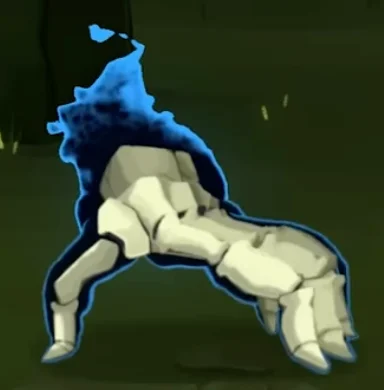
Key Osty Cards
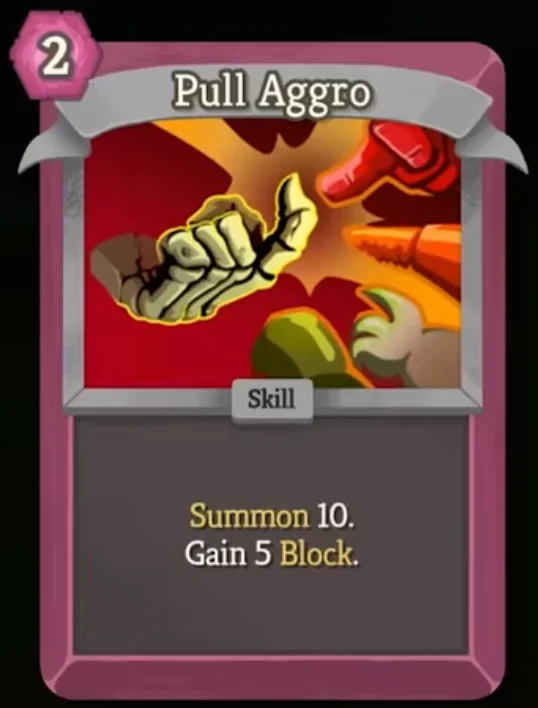
Pull Aggro (2 Energy, Skill) — Summon 10. Gain 5 Block. This is your primary tool for rebuilding Osty after he's destroyed, combining defense with companion revival.
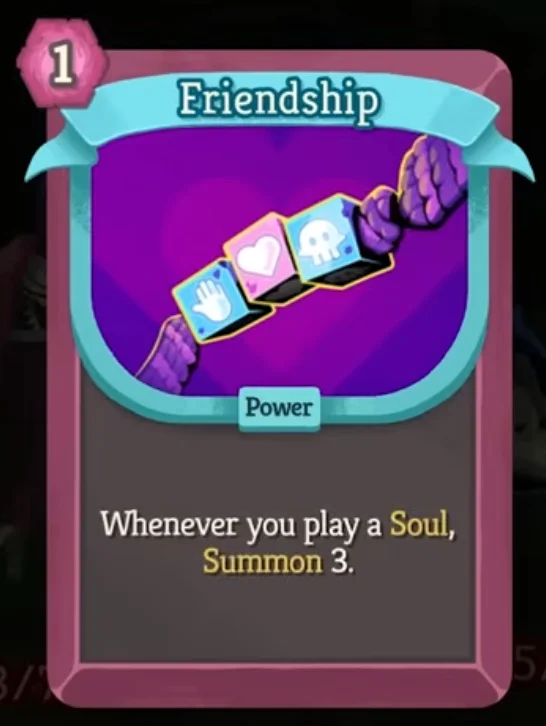
Friendship (1 Energy, Power) — Whenever you play a Soul, Summon 3. This Power turns every Soul token into both card draw and Osty healing, linking two of the Necrobinder's core systems together.
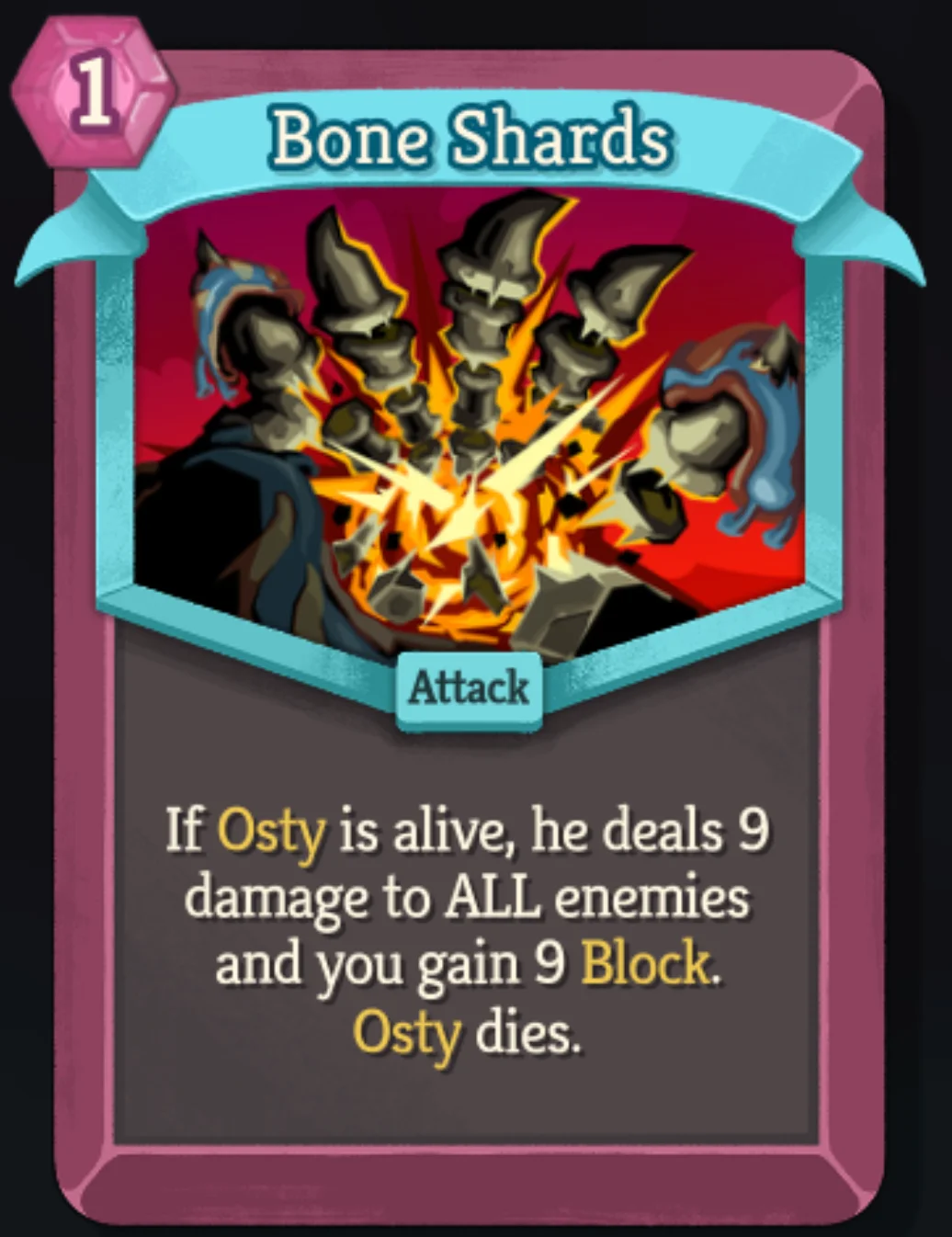
Bone Shards (1 Energy, Attack) — If Osty is alive, he deals 9 damage to ALL enemies and you gain 9 Block. Osty dies. A powerful AOE nuke that deliberately sacrifices your companion for a burst of damage and defense — then you resummon him next turn.
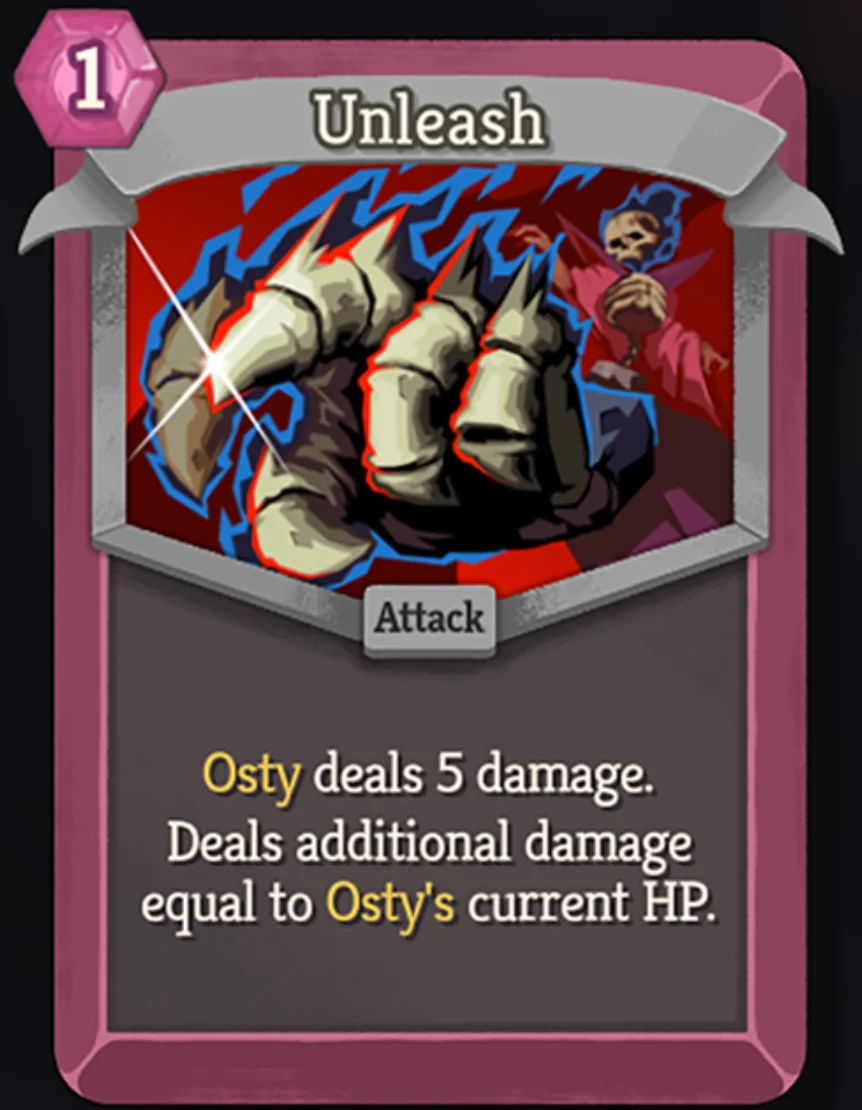
Unleash (1 Energy, Attack) — Osty deals 5 damage. Deals additional damage equal to Osty's current HP. The payoff card for stacking Osty's HP as high as possible before unleashing a devastating blow.
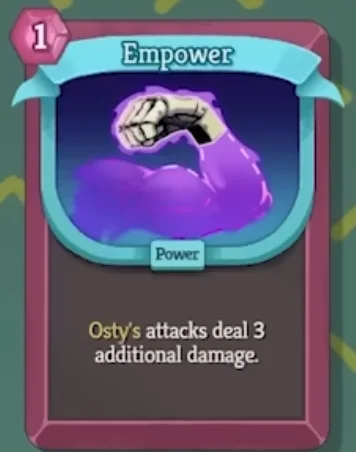
Empower (1 Energy, Power) — Osty's attacks deal 3 additional damage. A permanent scaling Power that makes Osty's passive attacks increasingly dangerous each turn.
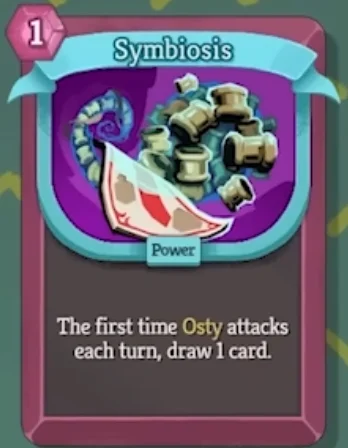
Symbiosis (1 Energy, Power) — The first time Osty attacks each turn, draw 1 card. Ties Osty's presence directly into your card draw engine.
The Strategic Tension
The core tension with Osty is: build him up vs. sacrifice him. You can stack his HP high for a massive Unleash, or intentionally sacrifice him with Bone Shards for AOE damage and then resummon. Both paths are viable, and the best players will switch between them depending on the encounter.
Pillar 2: Doom — The Death Clock
While the Silent relies on Poison to whittle enemies down over time, the Necrobinder uses Doom to bypass traditional combat entirely.
How Doom Works
- Doom is a debuff applied to enemies (or yourself)
- Doom does not tick down and does not deal damage over time (unlike Poison)
- If an enemy's Doom meets or exceeds their current HP, the enemy is instantly executed at end of their turn
- This creates a "race against time" — stack Doom high enough before the enemy kills you
Key Doom Cards
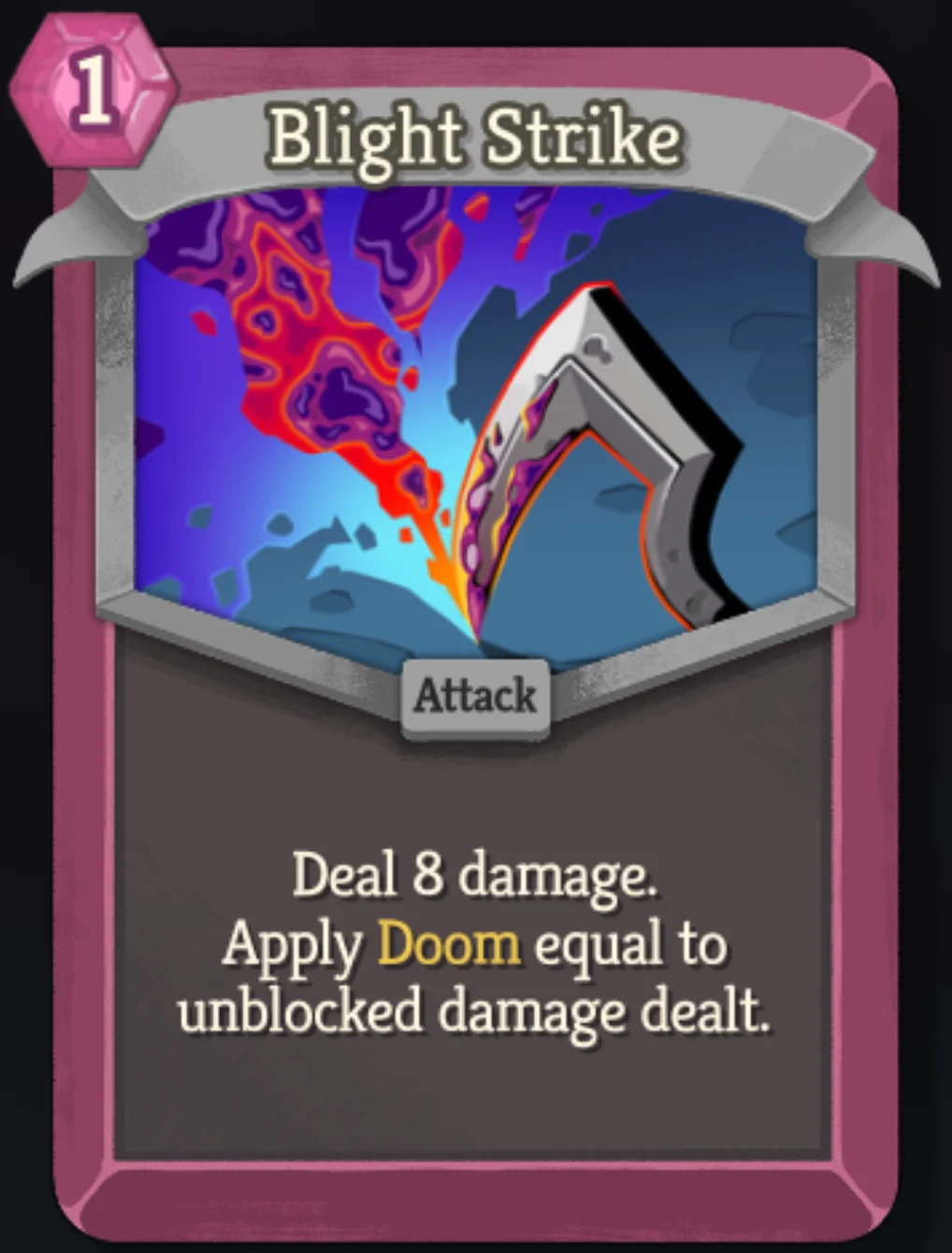
Blight Strike (1 Energy, Attack) — Deal 8 damage. Apply Doom equal to unblocked damage dealt. An efficient opener that simultaneously chips HP and applies Doom, making the execution threshold easier to reach.
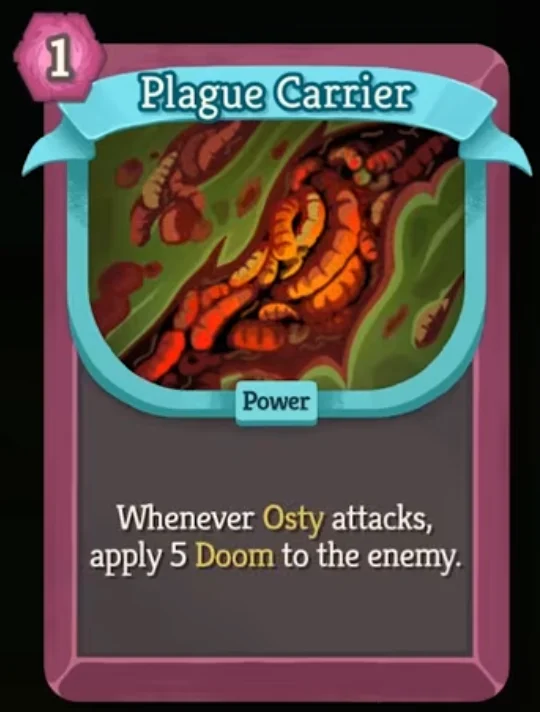
Plague Carrier (1 Energy, Power) — Whenever Osty attacks, apply 5 Doom to the enemy. The ultimate synergy between the Osty system and Doom — every passive Osty attack now ticks the death clock forward.
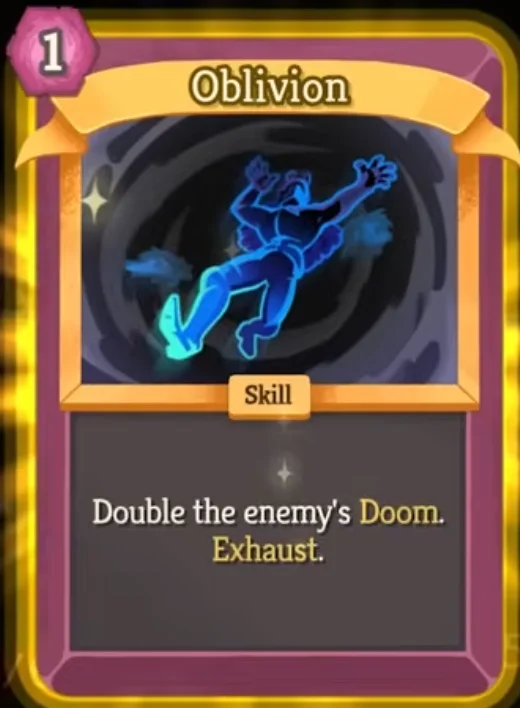
Oblivion (1 Energy, Skill) — Double the enemy's Doom. Exhaust. A terrifying card that can push an enemy from "manageable" to "dead" in a single play.
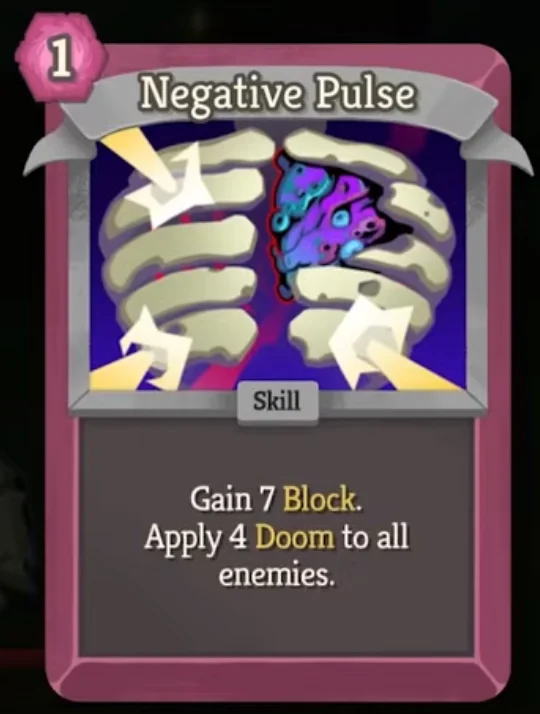
Negative Pulse (1 Energy, Skill) — Gain 7 Block. Apply 4 Doom to all enemies. Both defensive and offensive — applies Doom to every enemy on screen while keeping you alive.
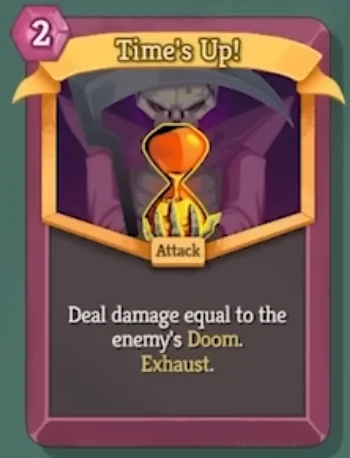
Time's Up! (2 Energy, Attack) — Deal damage equal to the enemy's Doom. Exhaust. The ultimate payoff for a Doom-heavy strategy — if an enemy has 40 Doom, this deals 40 damage. Often triggers an immediate execution.
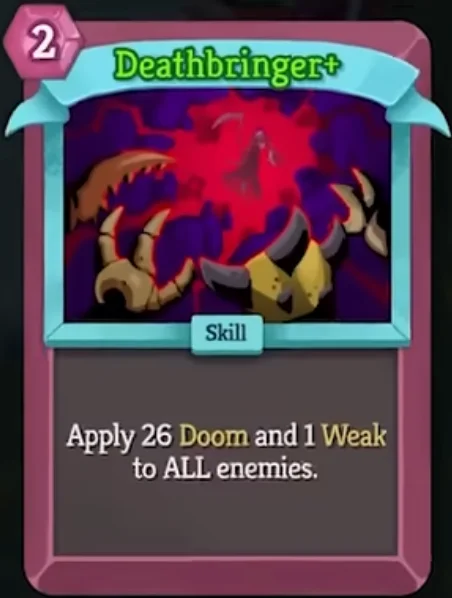
Deathbringer+ (2 Energy, Skill) — Apply 26 Doom and 1 Weak to ALL enemies. The upgraded version is one of the most devastating Doom cards in the game, capable of threatening entire encounters in a single play.
The Self-Doom Danger
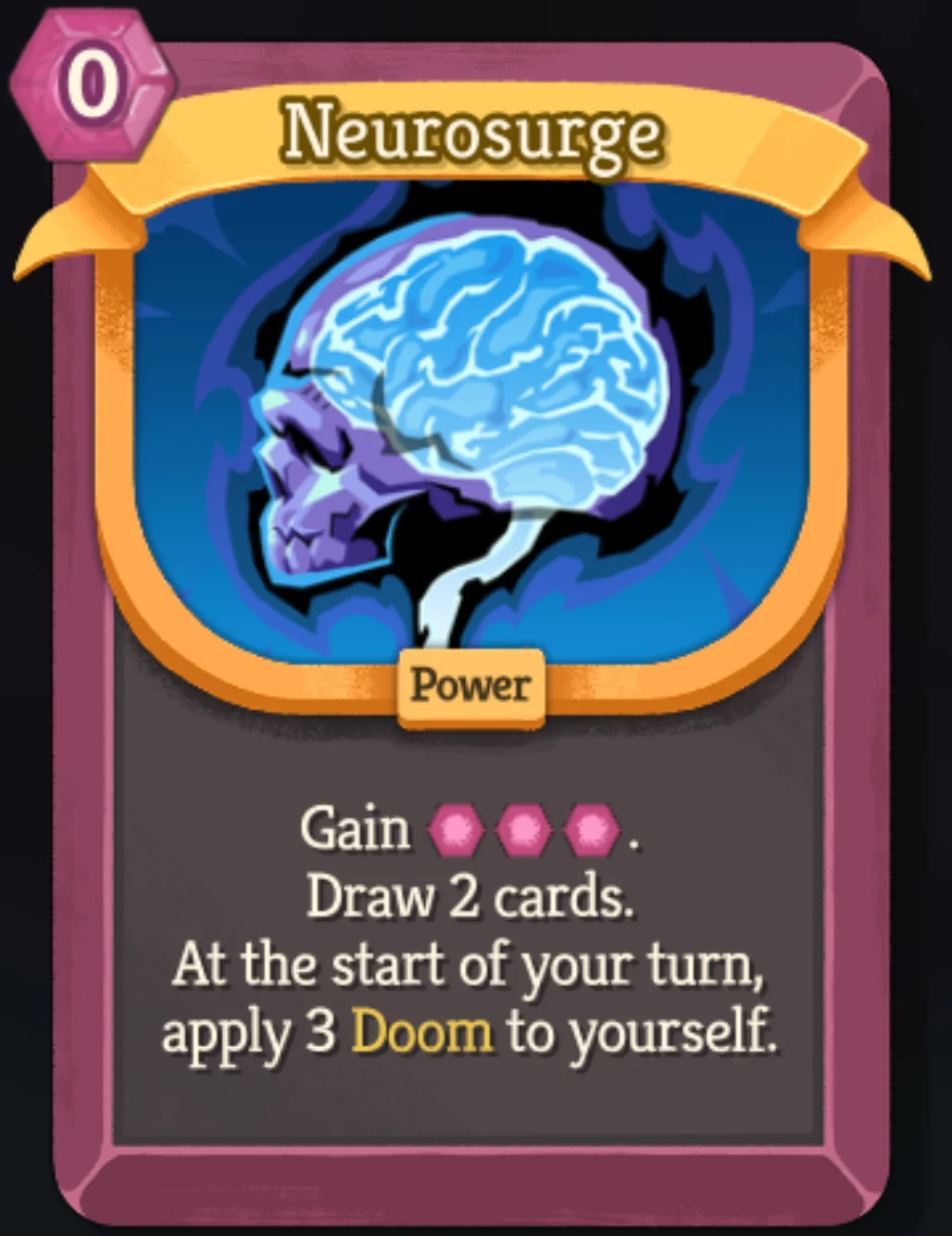
Doom isn't just for enemies. The Necrobinder's most explosive energy generator, Neurosurge (0 Energy, Power) — Draw 2 cards, but at the start of your turn, apply 3 Doom to yourself — effectively puts you on your own countdown. This creates an extremely high-risk, high-reward playstyle where you must kill the enemy before your own Doom catches up.
Pillar 3: Souls — Burst Card Draw
To maintain her momentum through complex multi-system turns, the Necrobinder harvests Souls.
How Souls Work
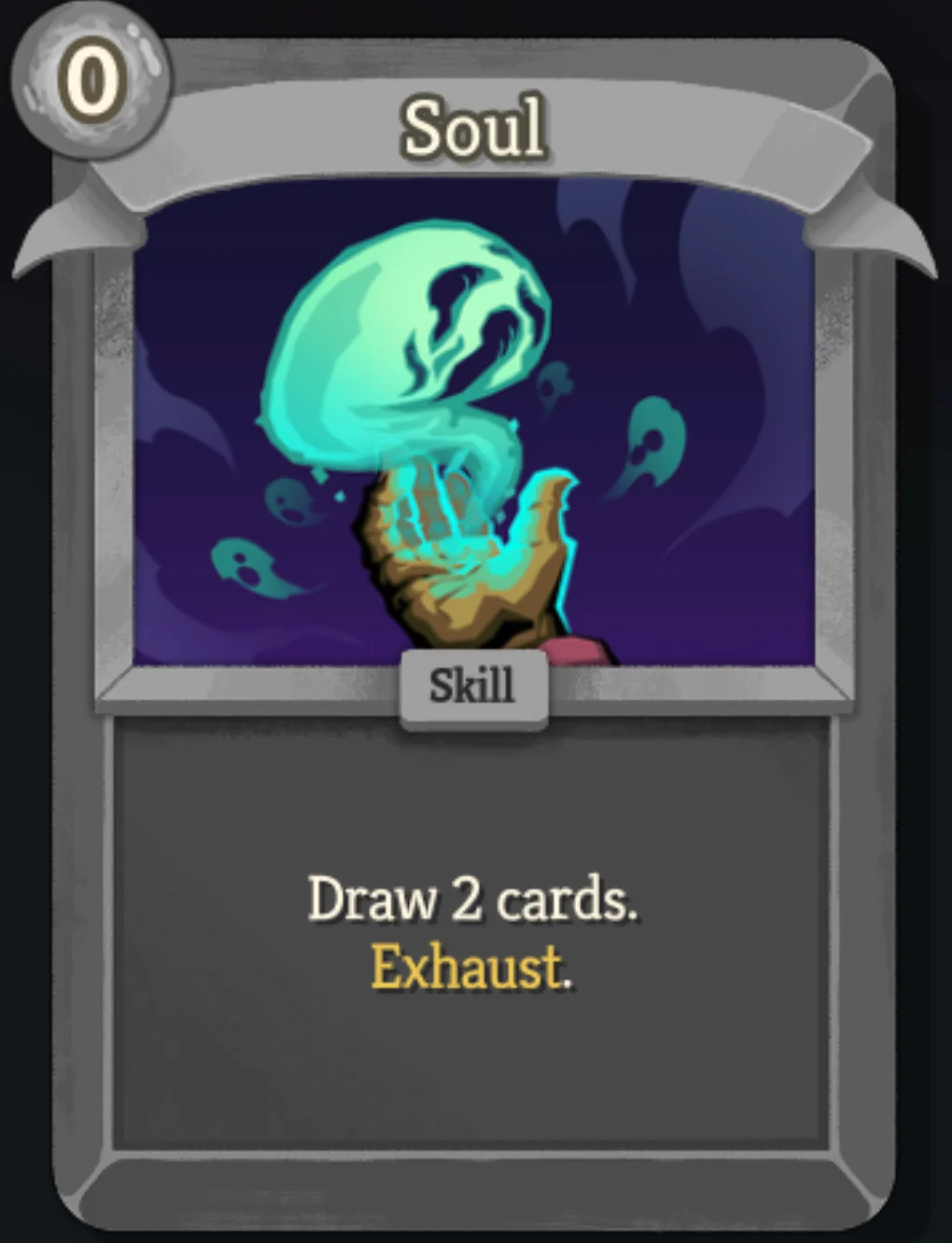
- Soul is a 0-cost Skill token that reads "Draw 2 cards. Exhaust."
- Souls are generated by various cards and added to your Draw Pile, Hand, or Discard Pile
- Because they cost 0 and Exhaust immediately, they provide burst card draw without clogging your deck
Key Soul Cards
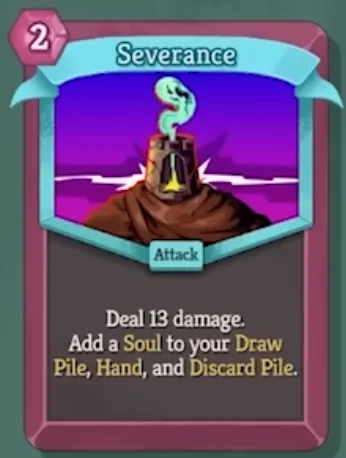
Severance (2 Energy, Attack) — Deal 13 damage. Add a Soul to your Draw Pile, Hand, and Discard Pile. One card that distributes Souls across all three zones, ensuring you'll find them no matter what.
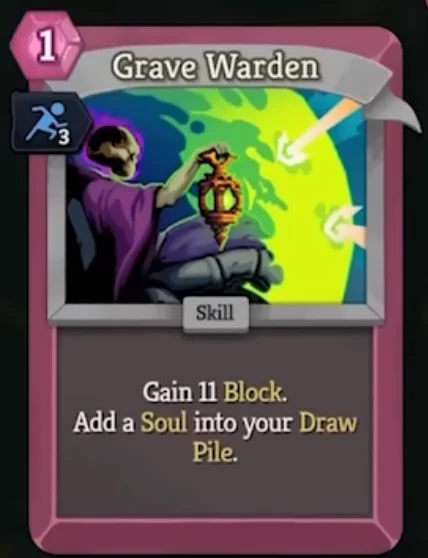
Grave Warden (1 Energy, Skill) — Gain 11 Block. Add a Soul into your Draw Pile. A solid defensive card that also fuels your Soul engine.
Carve Ghost+ (1 Energy, Attack) — Deal 11 damage. Add 2 Souls into your Hand. The upgraded version is an immediate draw-4 when you play the Souls it generates.

Souls + Friendship Combo
When you have Friendship (Whenever you play a Soul, Summon 3) active, every Soul played also heals Osty by 3 HP. This creates a self-sustaining loop: Souls give you cards, cards give you Osty HP, and a healthy Osty gives you more time to play more cards.
Pillar 4: Card Transformation — Ethereal & Keyword Application
The Necrobinder has a unique ability to modify other cards by adding keywords during combat.
Key Transformation Cards
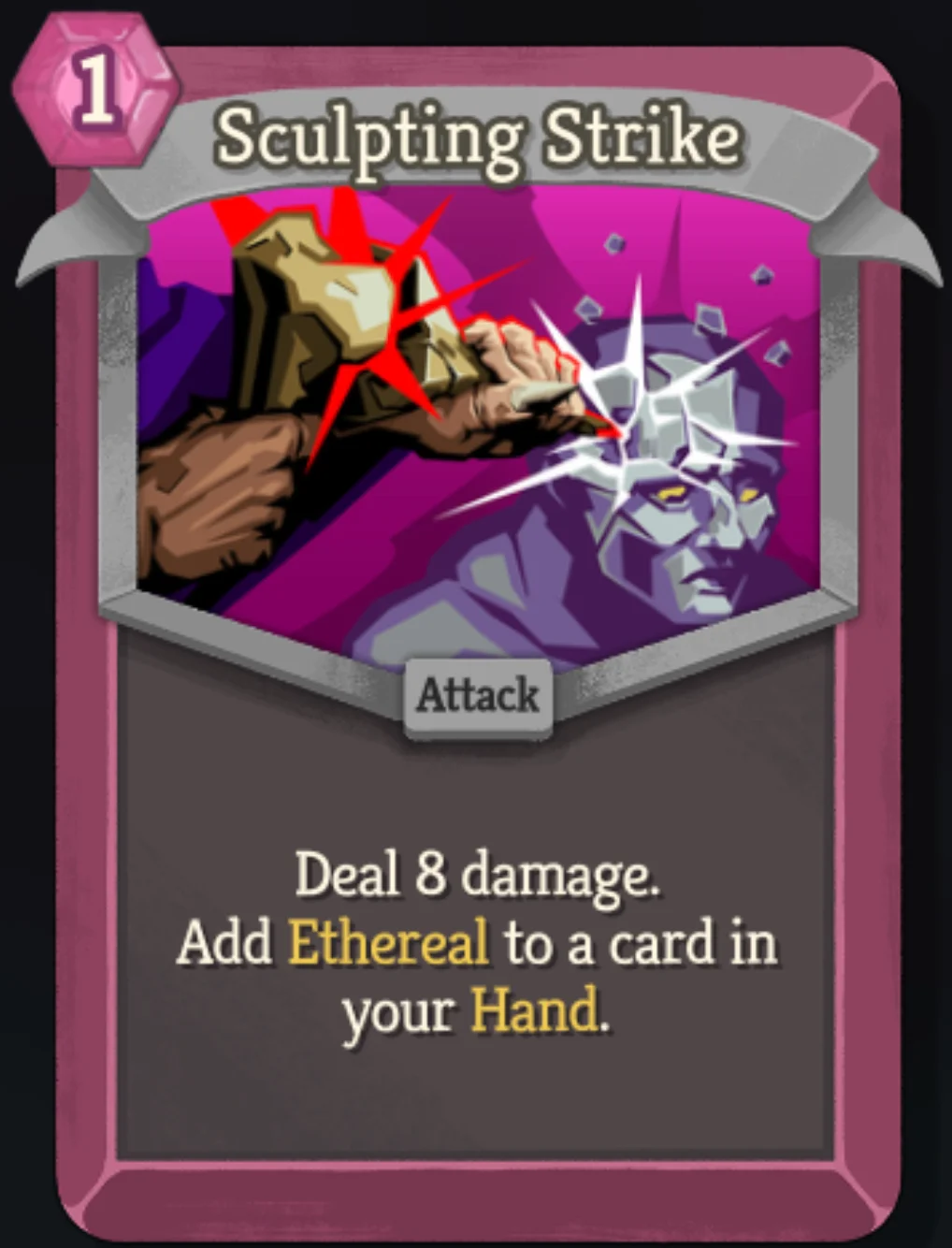
Sculpting Strike (1 Energy, Attack) — Deal 8 damage. Add Ethereal to a card in your Hand. Ethereal cards vanish at end of turn if not played, but this enables synergies with Pagestorm.
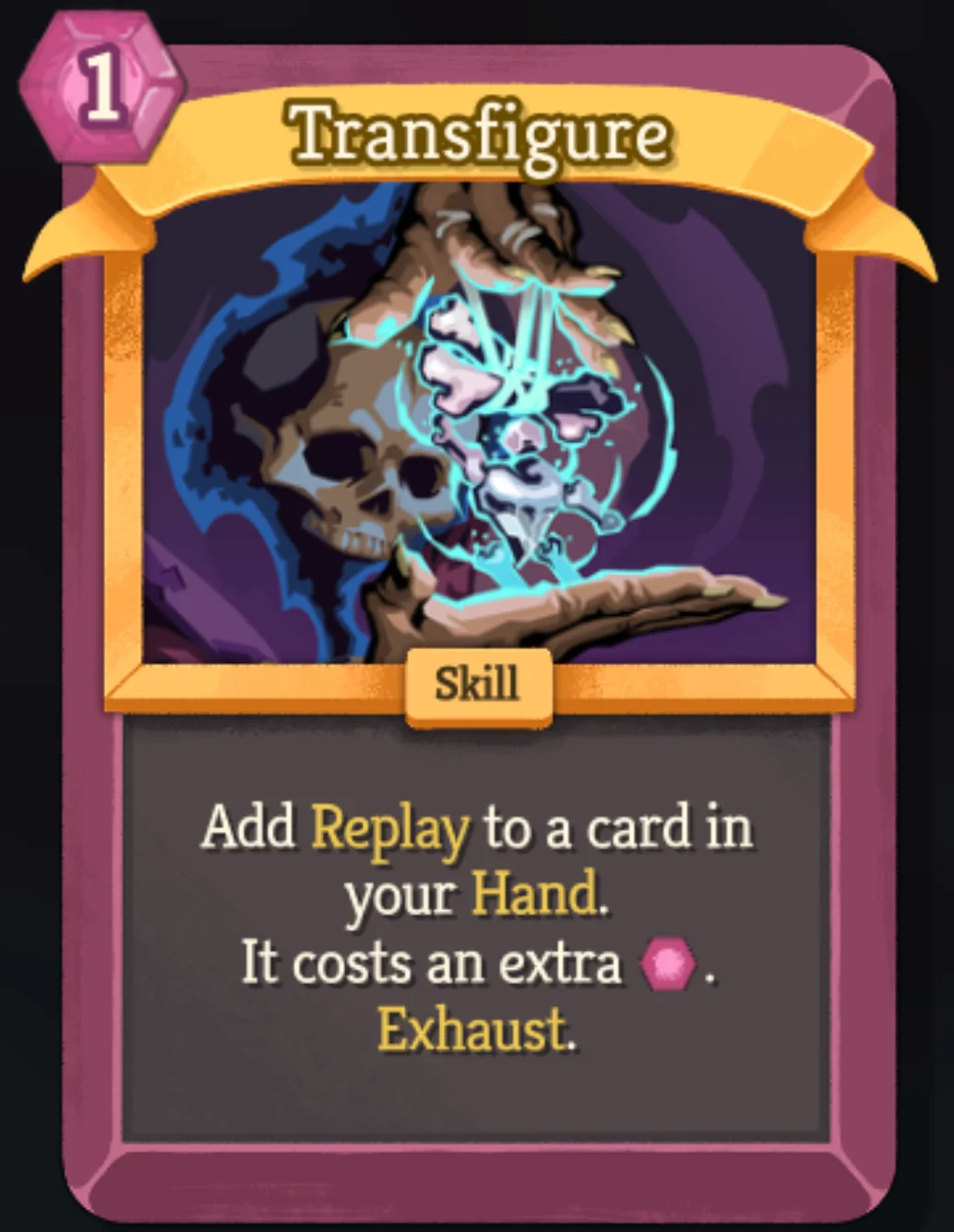
Transfigure (1 Energy, Skill) — Add Replay to a card in your Hand. It costs 1 more. Exhaust. Replay causes a card to be played twice — devastating when applied to high-impact attacks.
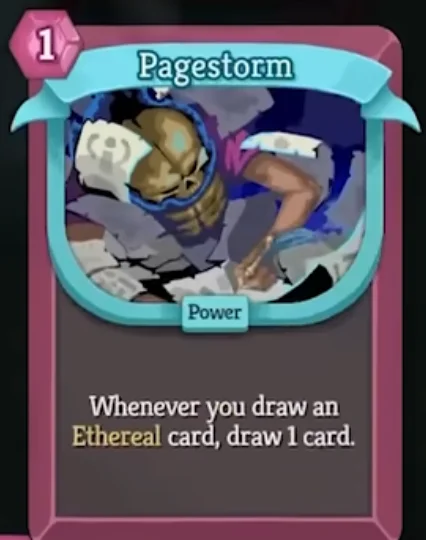
Pagestorm (1 Energy, Power) — Whenever you draw an Ethereal card, draw 1 card. The engine piece that turns the Ethereal "downside" into an advantage — every Ethereal card drawn gives you a free additional draw, enabling massive velocity turns.
Notable Utility & Support Cards
Beyond the four main pillars, the Necrobinder has several cards that fill critical utility roles:
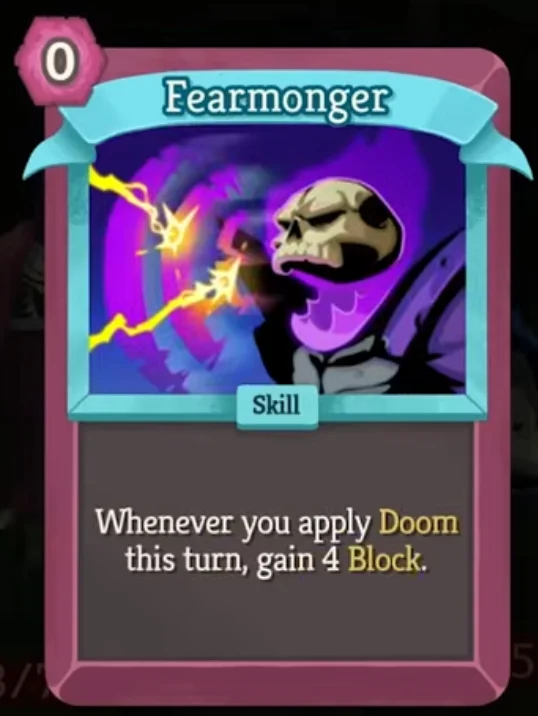
Fearmonger (0 Energy, Skill) — Whenever you apply Doom this turn, gain 4 Block. Turns your offensive Doom applications into defensive Block, solving the "offense vs. defense" tension for a whole turn.
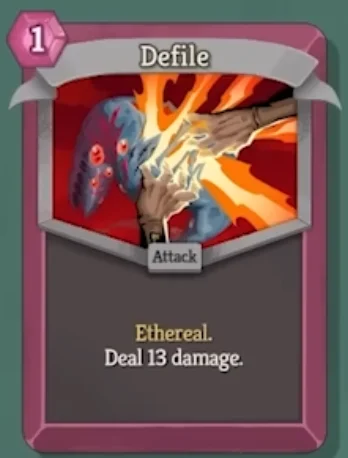
Defile (1 Energy, Attack) — Ethereal. Deal 13 damage. High damage for 1 Energy, but vanishes if not played. Pairs with Pagestorm and Veilpiercer.
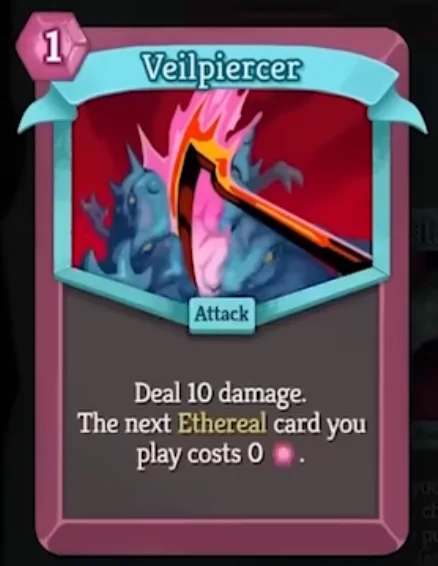
Veilpiercer (1 Energy, Attack) — Deal 10 damage. The next Ethereal card you play costs 0. Enables free plays of expensive Ethereal cards.
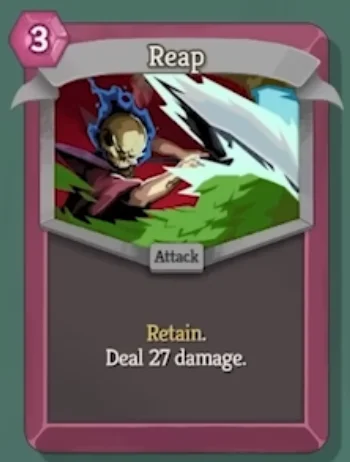
Reap (3 Energy, Attack) — Retain. Deal 27 damage. A massive single-target nuke that you can hold until the perfect moment.
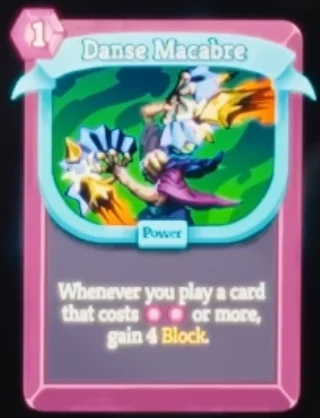
Danse Macabre (1 Energy, Power) — Whenever you play a card that costs 2 or more, gain 4 Block. A passive defense engine that rewards playing the Necrobinder's more expensive cards.
Build Archetypes
Based on the known card pool, we can identify several distinct build directions:
1. Osty Tank Build
Focus on Summon scaling and keeping Osty at maximum HP. Key cards: Pull Aggro, Friendship, Empower, Symbiosis, Unleash. Use Osty as both a damage sponge and a finisher with Unleash.
2. Doom Execution Build
Stack Doom as fast as possible with Plague Carrier, Blight Strike, Negative Pulse, and Oblivion. Finish with Time's Up! or just let enemies die at end of turn. Works best against high-HP single targets like bosses.
3. Self-Doom Speedrun Build
The most dangerous archetype. Use Neurosurge for massive card draw, accept the self-Doom risk, and try to kill everything before your own clock runs out. Pairs well with Fearmonger for defensive Block generation.
4. Ethereal Velocity Build
Build around Pagestorm + Sculpting Strike + Defile + Veilpiercer. The goal is to draw through your entire deck in a single turn by chaining Ethereal card draws, playing dozens of cards before your own Doom timer expires.
What We Don't Know Yet
As Slay the Spire 2 is still in pre-release, several questions remain:
- Starting deck composition — Which cards does the Necrobinder start with? (Strike and Defend are confirmed as starters, plus likely a basic Summon card)
- Starting relic — What is her unique starting relic? Not yet revealed
- Ascension-specific changes — How does Ascension mode modify the Necrobinder's gameplay?
- Balance state at Early Access — The January 2026 Neowsletter showed that cards are still being reworked (e.g., the starter card "Bodyguard" was entirely replaced by "Unleash")
Summary
The Necrobinder represents a bold new direction for Slay the Spire 2. She's the most complex character Mega Crit has ever designed — demanding that players juggle companion HP, Doom thresholds, Soul cycling, and card transformation simultaneously. For players who love intricate synergy engines and high-risk decision-making, she promises to be the most rewarding character in the Spire.
With 40 known cards spanning Attacks, Skills, and Powers — and multiple viable build archetypes — the Necrobinder is set to become a fan favourite when Slay the Spire 2 hits Early Access in March 2026.
Comments (0)
Be the first to comment.